What to Look for in a Cattery: Your Essential Inspection Checklist
Standing in the car park of your first cattery visit, you might be wondering: what exactly am I supposed to be looking at here? It's not like there's a "good cattery" stamp on the door.
Here's the reality. With 40% of Kiwi households owning cats – that's roughly 1.26 million felines across New Zealand according to Companion Animals NZ's 2024 data – finding quality boarding isn't optional. It's something most of us will need at some point.
The tricky part? New Zealand doesn't have mandatory cattery licensing in most regions. Which means the homework falls on you.
Looking for catteries in your area? Explore options in Auckland, Wellington, Christchurch, and other regions across New Zealand.
The Quick Answer
If you're skimming, here's what matters: individual secure units with sneeze barriers between them, proper double-door security, clean facilities that don't smell of ammonia, staff who ask detailed questions about your cat, clear emergency procedures, and proof of vaccination requirements. The space should be at least 6ft by 4ft (1.8m by 1.2m) with climbing options and separate areas for eating, sleeping, and toileting.
For a comprehensive overview of choosing a cattery including pricing and policies, read our complete guide to choosing a cattery in New Zealand.
Now let's break down exactly what to inspect.
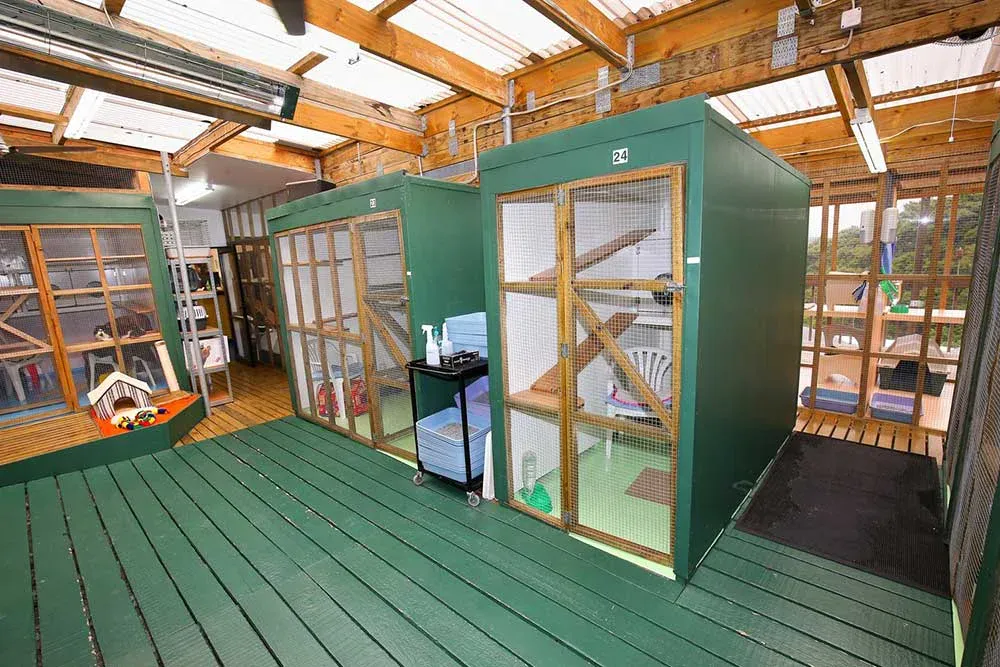 Quality catteries provide spacious units with enrichment options
Why Your Inspection Visit Matters
Most catteries will happily show you around – and if they won't, that's your first red flag. According to International Cat Care, a well-run cattery expects visits and has nothing to hide.
The SPCA's position is clear: always visit boarding establishments before booking. They've flagged common complaints about facilities including poor hygiene, inadequate security, insufficient supervision, and limited veterinary access.
Your visit isn't about being polite. It's about making sure your cat will be safe, comfortable, and properly cared for.
Section 1: Security and Escape Prevention
Double-Door Systems
Every unit should have what the industry calls a "safety corridor" or "security area" outside the main enclosure. Here's how it works: when staff open the outer door, there's still an inner door or barrier between them and your cat.
Why does this matter? Cats are quick. One moment of distraction and they're gone. According to Cats Protection UK, this double-door system is non-negotiable for preventing escapes.
What to check:
- Is there a physical barrier between the outer door and the cat's space?
- Are doors self-closing or do they rely on staff remembering?
- Can you see any gaps where a determined cat might squeeze through?
- Are windows properly secured with mesh or bars?
Structural Integrity
Walk around and actually look at the condition of each unit. I'm talking about:
- Gaps in walls or roofing
- Broken latches or hinges
- Loose mesh or fencing
- Rotting wood that might give way
A cat that escapes from a cattery faces serious risks – traffic, predators, getting lost. This isn't about being picky. It's about basic safety.
Section 2: Disease Prevention and Hygiene
Sneeze Barriers
Here's something most people miss: cats can spread respiratory diseases like feline herpes and calicivirus through the air. They literally sneeze viruses at each other.
International Cat Care recommends either a 2-foot (60cm) gap between units OR full-height solid barriers – usually Perspex or similar material.
Look for:
- Solid barriers between adjacent units (not just mesh)
- Barriers that extend the full height of the enclosure
- No shared air space between units
- Each cat having completely separate ventilation
If cats from different households can touch noses or share airflow, diseases will spread. Simple as that.
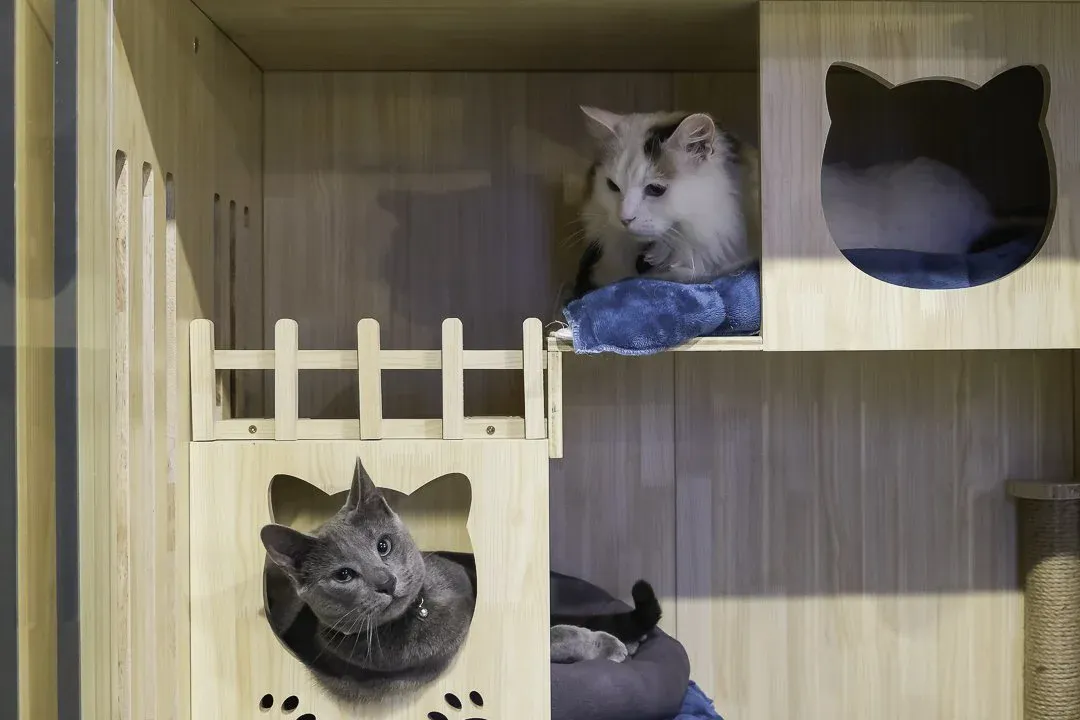 Proper barriers between units prevent disease transmission
Cleanliness Standards
Trust your nose. A properly cleaned, well-ventilated cattery shouldn't assault your senses the moment you walk in.
Red flags:
- Strong ammonia smell (indicates infrequent litter tray cleaning)
- Visible dirt or waste in units
- Food bowls with crusty old food stuck to them
- Water bowls with algae or debris
- Stained bedding or floors
Good signs:
- Neutral or very mild smell
- Clean feeding and water bowls
- Fresh litter in trays
- Bedding that looks regularly washed
- Separate cleaning areas for food bowls and litter equipment
The MPI Code of Welfare for temporary housing specifies that facilities must maintain proper hygiene standards. But enforcement is patchy, so your eyes and nose are the best inspectors.
Vaccination Policy
Any cattery that doesn't ask for vaccination certificates is putting every cat at risk. Full stop.
They should require:
- Proof of F3 vaccination at minimum (feline herpes, calicivirus, parvovirus)
- Vaccinations done at least 2-3 weeks before boarding
- Current vaccination certificates with dates and veterinary details
Some facilities also require FeLV (feline leukaemia) vaccination. Ask what their policy is and make sure they actually check certificates – not just ask if cats are vaccinated.
Learn more about vaccination requirements for cattery boarding in our detailed guide.
Section 3: Space and Accommodation Quality
Size Requirements
According to International Cat Care, the recommended minimum size for a cattery unit is 6ft by 4ft (1.8m by 1.2m). That's roughly the size of a small bathroom.
But here's the thing – it's not just about floor space. Cats are vertical creatures. They climb, perch, and view the world from up high.
What to check:
- Is there adequate floor space for separate sleeping, eating, and toileting areas?
- Are there shelves, platforms, or cat trees for climbing?
- Can a cat stretch fully in any direction?
- Is there a cozy, enclosed sleeping area where they can hide?
If the unit feels cramped to you, it'll definitely feel cramped to a cat spending 24 hours a day there.
Indoor/Outdoor Access
This one's a matter of preference and climate. Some catteries offer units with outdoor "runs" or enclosed patios. Others are fully indoor with climate control.
Indoor-only units:
- Better temperature control
- Protection from weather and pests
- Often quieter
- May feel more confined
Indoor/outdoor units:
- More space and variety
- Natural light and fresh air
- Exposed to temperature fluctuations
- Potential noise from outside
Neither option is inherently better. Think about what your cat is used to at home.
 Vertical space and perching options reduce stress
Temperature and Ventilation
Cats are comfortable in roughly the same temperature range as humans. According to the MPI Code of Welfare, facilities must maintain appropriate temperatures and air quality.
Ask about:
- Heating for winter (especially overnight)
- Cooling or ventilation for summer
- How they handle temperature extremes
- Whether units have individual climate control
You shouldn't see cats huddled and shivering, nor should they be panting from heat.
Section 4: Separation from Dogs
This is simple but crucial: cats and dogs should be completely separate. Not just in different units. In different areas entirely.
Cats Protection notes that constant barking causes significant stress to cats. It's not about whether your cat is "used to dogs." The stress response is physiological.
What to check:
- Can you hear dogs barking from the cat area?
- Do cats and dogs share walkways or access routes?
- Are waste disposal areas separate?
Ideally, choose a cat-only facility. If that's not possible, make sure cats are housed well away from any kennel areas.
Section 5: Daily Care and Supervision
Staffing Levels
Here's a question most people don't think to ask: who will actually be looking after your cat, and how much time will they spend with them?
Good questions:
- How many cats does each staff member care for?
- What's the daily routine (feeding times, cleaning schedule, play time)?
- Are staff on-site overnight or only during business hours?
- Who checks on cats outside regular hours?
- What's the staff training and experience with cats?
A facility with 50 cats and one person isn't going to provide individualized attention. Simple math.
Feeding Practices
What to ask about:
- Can you bring your cat's regular food? (Important for sensitive stomachs)
- How do they handle picky eaters?
- Is feeding schedule flexible for cats used to specific routines?
- How do they track each cat's food intake?
- Are food bowls cleaned between meals?
- Where is food stored? (Should be cool, dry, pest-free)
Changes in eating habits are often the first sign something's wrong. Good catteries monitor this carefully.
Litter Tray Management
Check that:
- Each cat has their own litter tray
- Trays are cleaned at least twice daily (morning and evening minimum)
- They use quality, dust-free litter
- Trays are positioned away from food bowls
- They track toileting habits for health monitoring
Your cat shouldn't have to use a dirty litter tray because cleaning only happens once a day.
 Access to veterinary care is essential for boarding facilities
Section 6: Emergency Procedures and Veterinary Care
Veterinary Relationships
This is one of the most important questions you'll ask: what happens if my cat gets sick or injured?
They should have:
- A named vet practice they work with regularly
- Clear protocol for emergencies (who calls you, who authorizes treatment)
- Understanding of your own vet's details as backup
- 24-hour emergency access (even if it's via emergency vet)
Ask specifically: "If my cat stops eating, becomes lethargic, or shows signs of illness, what's your process?" Their answer should be detailed and immediate, not vague.
Vet-Attached Facilities
Some veterinary clinics run their own boarding facilities. The big advantage? Immediate access to veterinary care.
This is worth considering if your cat:
- Is elderly or has ongoing health issues
- Requires medication administration
- Has a history of stress-related illness
- Makes you generally anxious about leaving them
Research from the Companion Animals NZ 2024 report shows cat ownership peaks among people aged 45-64 – exactly the demographic more likely to have older cats needing extra care.
Medication Administration
If your cat needs medication, ask specific questions:
- Are staff trained to give pills, liquids, or injections?
- Is there an additional charge for medication administration?
- How do they track doses?
- What happens if a dose is missed?
- Can they handle complex medication schedules?
Get this in writing. A misunderstanding here could have serious consequences.
Section 7: Communication and Updates
During Your Cat's Stay
Many modern catteries offer:
- Daily text or email updates
- Photo or video messages
- Emergency contact protocols
- Update schedules you can customize
This isn't just nice to have. It's peace of mind. Ask what communication they offer and how frequently.
Intake and Pickup Process
At drop-off, they should:
- Ask detailed questions about your cat's personality, habits, and preferences
- Record medical information and emergency contacts
- Review vaccination certificates
- Note any special instructions
- Show you the exact unit your cat will occupy
At pickup, they should:
- Report on your cat's behavior, eating, and toileting
- Mention any concerns or changes they noticed
- Return all belongings
- Provide a record of their stay if requested
If they're rushing through either process, that tells you something about their attention to detail.
Section 8: Special Considerations
For Anxious or Shy Cats
Look for:
- Private units away from high-traffic areas
- Boxes or hiding spots within the unit
- Calm, quiet atmosphere
- Staff who understand feline stress signals
- Option for familiarization visits before actual boarding
Some catteries offer "trial stays" – just one night to see how your cat copes. Worth considering if your cat has never been boarded before.
Read our guide on preparing your cat for a cattery stay for tips on reducing anxiety, and learn about the science behind cat stress during boarding.
For Senior Cats
Additional questions:
- Do units have easy access (no high jumps required)?
- Can they accommodate mobility issues or arthritis?
- Are they comfortable with senior health monitoring?
- Is veterinary backup quickly accessible?
Consider a pre-boarding health check with your own vet, especially if your cat is over 10 years old.
For Cats with Medical Needs
Be thorough:
- Explain your cat's condition in detail
- Provide written care instructions
- Ensure staff are confident administering treatments
- Ask about monitoring frequency
- Leave your vet's direct contact details
If a facility seems hesitant about your cat's needs, keep looking. Better to find somewhere properly equipped than hope for the best.
If you're a first-time cat owner unsure about boarding requirements, our first-time cat owner guide covers essential basics. Understanding cat body language can also help you recognize stress signals when you pick up your cat.
Your Inspection Checklist
Print this out and take it with you:
Security:
- Double-door or safety corridor system
- Solid construction with no visible gaps
- Secure latches and doors
- Properly secured windows
Disease Prevention:
- Sneeze barriers between units (solid, not mesh)
- Individual, non-communal accommodation
- Clean, odor-free environment
- Vaccination certificates required
Space and Comfort:
- Minimum 6ft x 4ft unit size
- Vertical space with shelves or perches
- Separate sleeping, eating, toileting areas
- Appropriate temperature control
Separation:
- Cats housed away from dogs
- No audible barking in cat area
Daily Care:
- Reasonable staff-to-cat ratio
- Regular feeding schedule (can bring own food)
- Litter trays cleaned minimum twice daily
- Individual attention and monitoring
Emergency Procedures:
- Named veterinary practice with relationship
- Clear emergency protocol
- 24-hour access to veterinary care
- Comfortable administering medications
Communication:
- Regular updates available
- Clear contact process
- Detailed intake questions
- Emergency contact procedures
Licensing and Standards:
- Follows MPI Code of Welfare
- Licensed if required by local council
- Professional memberships or accreditations
- Positive reviews from other cat owners
Red Flags That Should End Your Visit Early
Sometimes you just know. These are the warning signs that should have you walking straight back out the door:
- Won't let you view actual boarding units – What are they hiding?
- Doesn't require vaccination certificates – They're gambling with every cat's health
- Strong ammonia smell – Indicates poor hygiene and infrequent cleaning
- Stressed or sick-looking cats visible in units – Shows inadequate care
- Dismissive or annoyed by your questions – You want staff who welcome thorough questions
- Can't clearly explain emergency procedures – This is non-negotiable
- Cats from different families sharing space – Unless you specifically chose communal boarding
- Visible illness symptoms in boarded cats – Red eyes, discharge, sneezing
- No clear supervision or staffing schedule – Who's watching your cat overnight?
Trust your instincts. If something feels wrong, it probably is.
What About Online Reviews?
Reviews can be helpful, but read them carefully. Look for patterns:
Good signs in reviews:
- Specific details about care quality
- Mentions of staff by name
- Photos shared by owners
- Descriptions of communication during boarding
- Comments about handling nervous or difficult cats
Ignore:
- Reviews only complaining about price
- Suspiciously generic praise
- Extremely outdated reviews (facilities change)
And remember: no place has 100% perfect reviews. Look for how they respond to criticism and whether they've addressed specific issues.
Making Your Decision
After visiting several catteries, you might feel overwhelmed. Here's how to narrow it down:
- Rule out anywhere that failed your non-negotiables (security, hygiene, vaccination policy)
- Consider your cat's specific needs (age, health, temperament)
- Factor in practical matters (location, price, availability)
- Trust your gut feeling about the staff and facility
The cheapest option isn't always the best value. An extra $5 per night is worth it for quality care.
The closest option isn't always the most convenient. An extra 10 minutes' drive to a better facility is worth it.
Still deciding between a cattery and home care? Read our comparison of cattery vs pet sitter to understand which option suits your cat best. For detailed pricing information across New Zealand, check our cat boarding cost guide.
Frequently Asked Questions
Should I book a pre-visit or just drop by?
Always call ahead. While good catteries welcome visits, they'll appreciate you checking their visiting hours. Some only show people around at specific times to minimize disruption to boarded cats.
How many catteries should I visit before deciding?
Visit at least two or three. You need a basis for comparison. What seems normal at the first place might look rough after you've seen somewhere better maintained.
Can I visit while my cat is staying there?
Policies vary. Some catteries discourage visits as they can unsettle cats. Others welcome them. Ask about their policy upfront if this matters to you.
What if everywhere seems fully booked?
For peak holiday periods, you might need to book 2-3 months ahead. If you're truly stuck, consider alternatives like professional pet sitters who come to your home. Browse catteries across New Zealand on PawSpot to find availability in your area.
My cat has never been to a cattery. Will they cope?
Most cats adjust within 24-48 hours. Consider a trial overnight stay before a longer booking. Pack familiar items with your scent. Choose a quiet, non-communal facility for first-timers.
Are expensive catteries necessarily better?
Not always. You're paying for facilities, location, and individualized attention. A vet-attached facility or boutique cattery will cost more, but offers specific advantages. Judge on quality, not just price.
The Bottom Line
Here's what it comes down to: your cat is going to spend days or weeks in this place. They can't tell you if they're uncomfortable, stressed, or unwell. The facility can't change their standards just for your booking.
So your inspection visit isn't about being awkward or demanding. It's about making sure the cattery's standards match what your cat needs.
Look past the marketing photos. Ignore the fancy names. Focus on the reality: secure units, clean facilities, knowledgeable staff, clear emergency procedures, and proper disease prevention.
And if you walk into a cattery and it just feels right – the staff genuinely care, your questions are welcomed, the cats look content, and everything meets your checklist – book with confidence.
Your cat might not thank you. But you'll sleep better knowing they're in good hands.
Ready to find a cattery? Browse trusted catteries across New Zealand on PawSpot, read reviews from other cat owners, and compare facilities in your region.
Related Reading
- How to Choose a Cattery in New Zealand: The Complete Guide - Comprehensive overview including pricing, policies, and what to pack
- Preparing Your Cat for a Cattery Stay - Reduce anxiety and help your cat adjust
- Vaccination Requirements for Cattery Boarding - What vaccines your cat needs and when
- Cattery vs Pet Sitter: Which is Right for Your Cat? - Compare both options
- Cat Boarding Costs in New Zealand - Pricing guide across regions
- The Science Behind Cat Stress During Boarding - Understanding feline stress responses
- Browse Catteries by Region - Find options in Auckland, Wellington, Christchurch, and beyond
Sources
- International Cat Care - Choosing a Boarding Cattery
- Cats Protection UK - Choosing a Cattery
- SPCA NZ - Boarding Establishments
- MPI - Code of Welfare: Temporary Housing of Companion Animals
- Companion Animals NZ - 2024 Pet Data Report
- Cat Chat - Choosing a Boarding Cattery
- Petfood Industry - NZ Pet Ownership Statistics 2024